Log in to Freesound

Problems logging in?
Don't have an account? Join now

Problems logging in?

Enter your email or username below and we'll send you a link to help you login into your account.

Back to log in

Almost there!

We've sent a verification link by email

Didn't receive the email? Check your Spam folder, it may have been caught by a filter. If you still don't see it, you can resend the verification email.

Default title

  • Sounds
  • Tags
  • Forum
  • Map
    • Sounds
    • Packs
    • Forum
    • Map
    • Tags
    • Random sound
    • Charts
    • Donate
    • Help

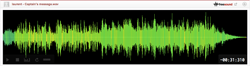
Amtor FEC-Navtex 3 x the quick brown fox.wav

Not enough ratings
cydon

August 11th, 2011

Follow
Sound effects > Animals
Amateur Radio

Amtor FEC-Navtex is a type of data transmissionmode. This is Used for amateur radio communication. Also it is used for weather- and seabroadcasts at VLF Band at about 500 Kcs. This test contains the international testsentence: "the quick brown fox jumps over the lazy dog 1234567890 times". It don't make much sense, but this sentence contains all letters and all numbers.

Sound illegal or offensive? Flag it!
amateur
amtor
brown
datasignal
fec-navtex
fox
ham
quick
radio
test

Type

Wave (.wav)

Duration

0:47.624

File size

8.0 MB

Sample rate

44100.0 Hz

Bit depth

16 bit

Channels

Stereo

Comments
Please log in to comment
A
acclivity

14 years, 5 months ago

Amtor was my favourite mode. Nice to hear this, I miss it. I won a SARTG Amtor contest years ago as G4ATG tho' my own call is G4BMK

  1. 98 downloads
  2. 1 comment
Attribution NonCommercial 4.0
You are free to share (to copy, distribute and transmit) and to remix (to adapt and modify) as long as you credit the author of the sound and do not use the sound for commercial purposes. Get attribution text...
Login to download
Share url:
920 x 245
Embed example, large size
481 x 86
Embed example, medium size
375 x 30
Embed example, small size
About Freesound Terms of use Privacy Cookies Developers Help Donations Blog Freesound Labs Get your t-shirt!
© 2026 Universitat Pompeu Fabra