Log in to Freesound

Problems logging in?
Don't have an account? Join now

Problems logging in?

Enter your email or username below and we'll send you a link to help you login into your account.

Back to log in

Almost there!

We've sent a verification link by email

Didn't receive the email? Check your Spam folder, it may have been caught by a filter. If you still don't see it, you can resend the verification email.

Default title

  • Sounds
  • Tags
  • Forum
  • Map
    • Sounds
    • Packs
    • Forum
    • Map
    • Tags
    • Random sound
    • Charts
    • Donate
    • Help

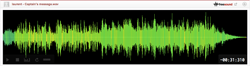
Eurasian Collared Dove call.wav

Overall rating (10 ratings)
klankbeeld

May 28th, 2023

Follow
Sound effects > Animals
birds NL 2023

LOOP> The Eurasian Collared Dove (Streptopelia Decaocto) has a persistent three-note call.
Streptopelia decaocto 20150119

The Eurasian collared dove (Streptopelia decaocto) is a dove species native to Europe and Asia; it was introduced to Japan, North America and islands in the Caribbean. Because of its vast global range and increasing population trend, it has been listed as Least Concern on the IUCN Red List since 2014. (wikipedia)

☕🎤Donate if you like my work🎤☕

https://www.paypal.com/paypalme/klankbeeld

Sound illegal or offensive? Flag it!
call
Collared
collared-dove
cooing
Dove
Eurasian
loop

Type

Wave (.wav)

Duration

0:03.084

File size

867.6 KB

Sample rate

48000.0 Hz

Bit depth

24 bit

Channels

Stereo

Comments
Please log in to comment
K
kevp888

2 years, 9 months ago

Yes ! Really great ! 5*

newlocknew

2 years, 9 months ago

Great!!!

  1. 217 downloads
  2. 2 comments
Attribution 4.0
You are free to share (to copy, distribute and transmit) and to remix (to adapt and modify) as long as you credit the author of the sound. Get attribution text...
Login to download
Share url:
920 x 245
Embed example, large size
481 x 86
Embed example, medium size
375 x 30
Embed example, small size
About Freesound Terms of use Privacy Cookies Developers Help Donations Blog Freesound Labs Get your t-shirt!
© 2026 Universitat Pompeu Fabra