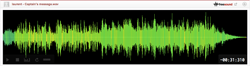
Healthy adult male, 20-second urination in a urinal located inside a public restroom.
A healthy adult should take an average of 20 to 30 seconds to fully empty their bladder. This is often referred to as the "21-second rule" in health discussions, which comes from research finding that most mammals over a certain size take roughly the same amount of time to urinate.
The brain primarily monitors the body during urination using sensory nerves that signal bladder fullness, not the ears listening to the sound of the stream. The sound of running water can be a learned psychological trigger (a conditioned response) for the urge to urinate, but it is not how the body's internal feedback mechanism works.
The actual internal process involves a "brain-bladder axis":
• Bladder Sensors: Stretch-sensing cells in the bladder wall detect expansion as it fills with urine.
• Nerve Signals: These sensory nerves send impulses up the spinal cord to the brainstem (specifically the periaqueductal gray) and higher brain centers.
• Brain Processing: The brain processes this information to create the conscious feeling of needing to urinate and determines if it is a socially appropriate time to go.
• Motor Control: When the decision is made to urinate, the brain sends signals down to relax the urethral sphincters and contract the bladder muscle to expel the urine.
The sound of urination can be a psychological cue that helps some people initiate or confirm the process, but the core biological feedback loop is neural, not auditory.
gicasso
Type
M4a (.m4a)
Duration
0:19.968
File size
661.4 KB
Sample rate
48000.0 Hz
Bitrate
271 kbps
Channels
Stereo
Comments